Home » hispanic marketing (Page 4)
Category Archives: hispanic marketing
Facebook Ten Top Countries
By Mari D. González
Last year, the August 13, 2010, Huffington Post’s Huffpost Tech, listed the following countries as the top Facebook users:
- U.S.
- U.K.
- Indonesia
- Italy
- India
- France
- Germany
- Mexico
- Turkey
- Canada
This year, as of July 5, Check Facebook, a Facebook marketing statistics site, contains a slightly different list of top Facebook countries:
- U.S.
- Indonesia
- U.K.
- India
- Turkey
- Mexico
- Philippines
- France
- Brazil
- Italy
What makes these countries top users?
- extensive access to Internet
- high population numbers
- users’ affinity for U.S. culture
- familiarity with the English language
- a high number of young users
- or, a combination of some or all these variables.
If you follow Internet use around the world, you might be familiar with the popularity of other social network sites such as Google’s Orkut in India and Brazil. With Brazil making this year’s list, one can speculate that users are moving from Orkut to Facebook. Yet, only 31.46% of Brazilian online users are on Facebook.
As for Indonesia, Turkey, Mexico, and the Philippines, 100% of online users are on Facebook, which means no other social-network or online communication platform is competing.
Why isn’t China on the list? China’s government prevents Internet users in China from accessing Facebook. The most popular site in China is RenRen, which can be accessed in the U.S. and is supported by U.S. investors.
Another question: Are the top 10 Facebook countries selected based on the percentage of each country’s total population of active online users or on the total number of users?
For example, 30% of Mexico’s total population (112,322,757 x .3 = 33,696,825) are Facebook users but 70% of Canada’s (34,507,000 x .7 = 24,154,900). It appears that Mexico made the list based on population-number advantage, and Canada was dropped because of its smaller population.
Edited by Connie Cobb
LATISM Conference in Pictures
By Mari D. González
I attended the Latino2 Silicon Valley Conference on Saturday, June 11, 2011 in Mountain View, CA and below are my pictures.
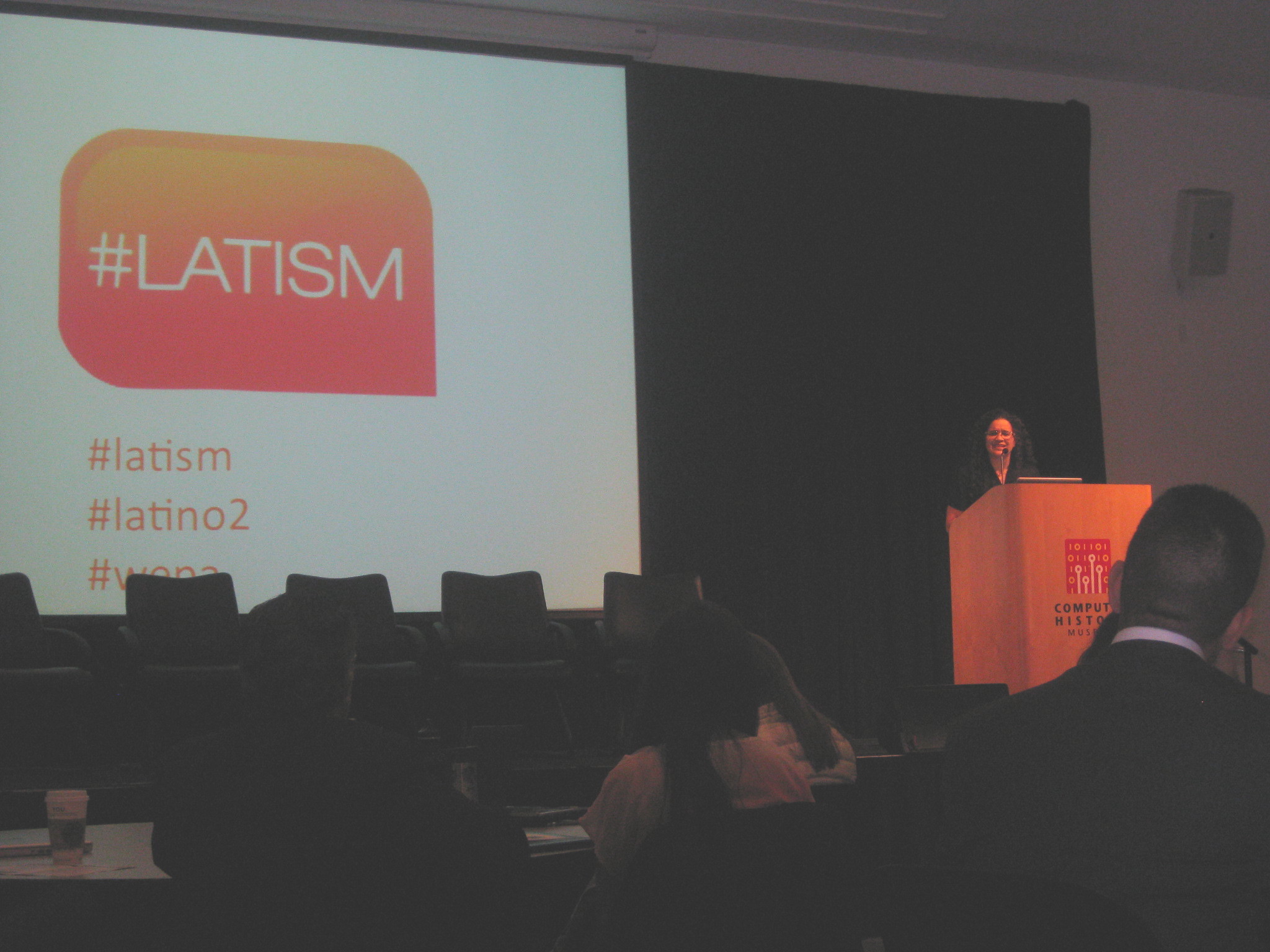
LATISM is the largest organization of Latino/Hispanic professionals engaged in social media.
Ana Roca-Castro, LATISM founder, opened the event.
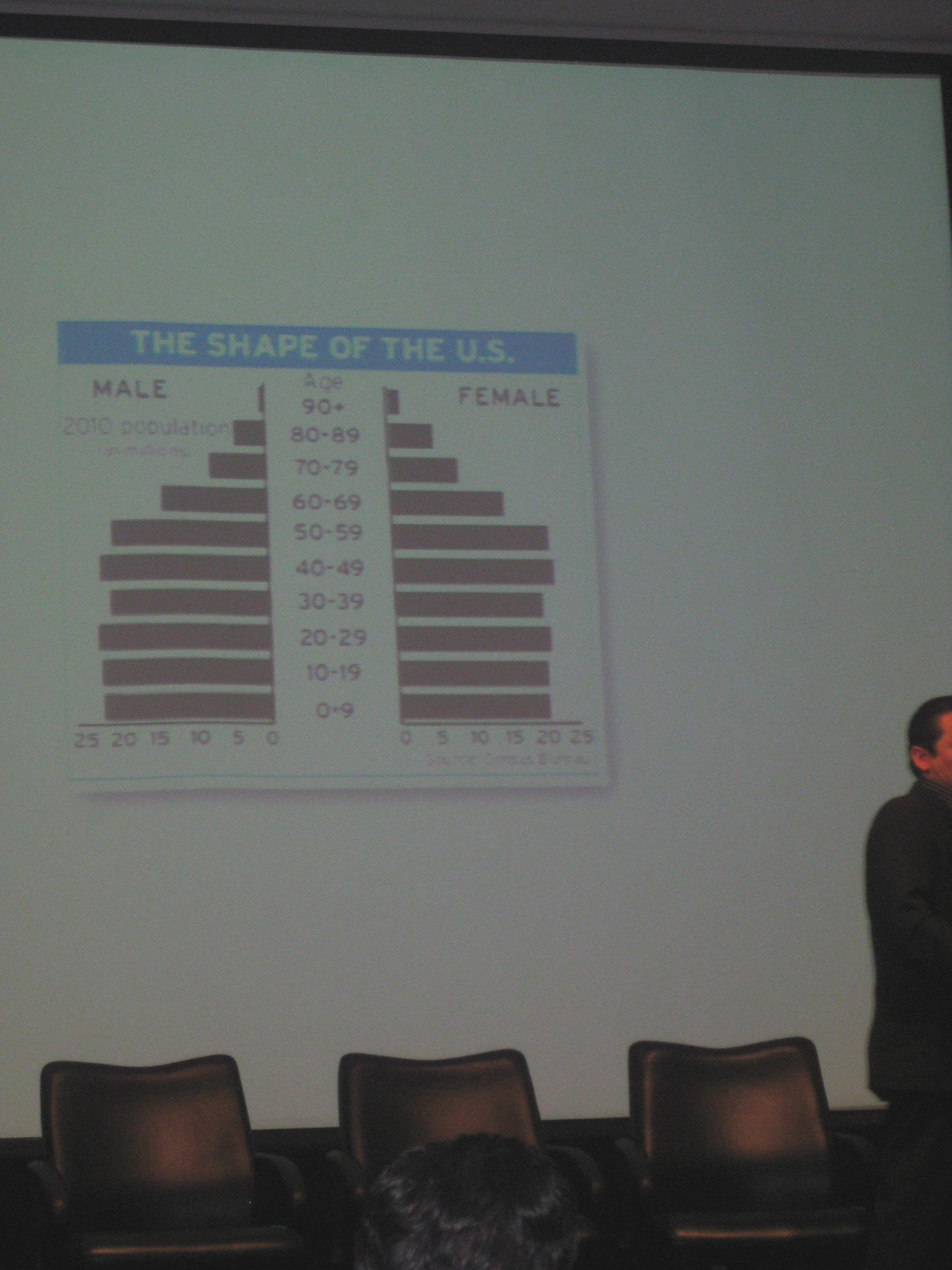
Giovanni Rodriguez, LATISM board member, explaining that Latinos are getting older slower, joining social media faster, and clicking more.

Our Key-Note Speaker, Brian Solis, Social Media Strategist and author of Engage.

The largest age segment of social media users are females between 40-59.
Brian Solis on his way out. I was able to get this picture with him.

Ana presented the most popular social network sites by Latinos with Facebook, Twitter, and Youtube topping the list, and LinkedIn in fourth place.

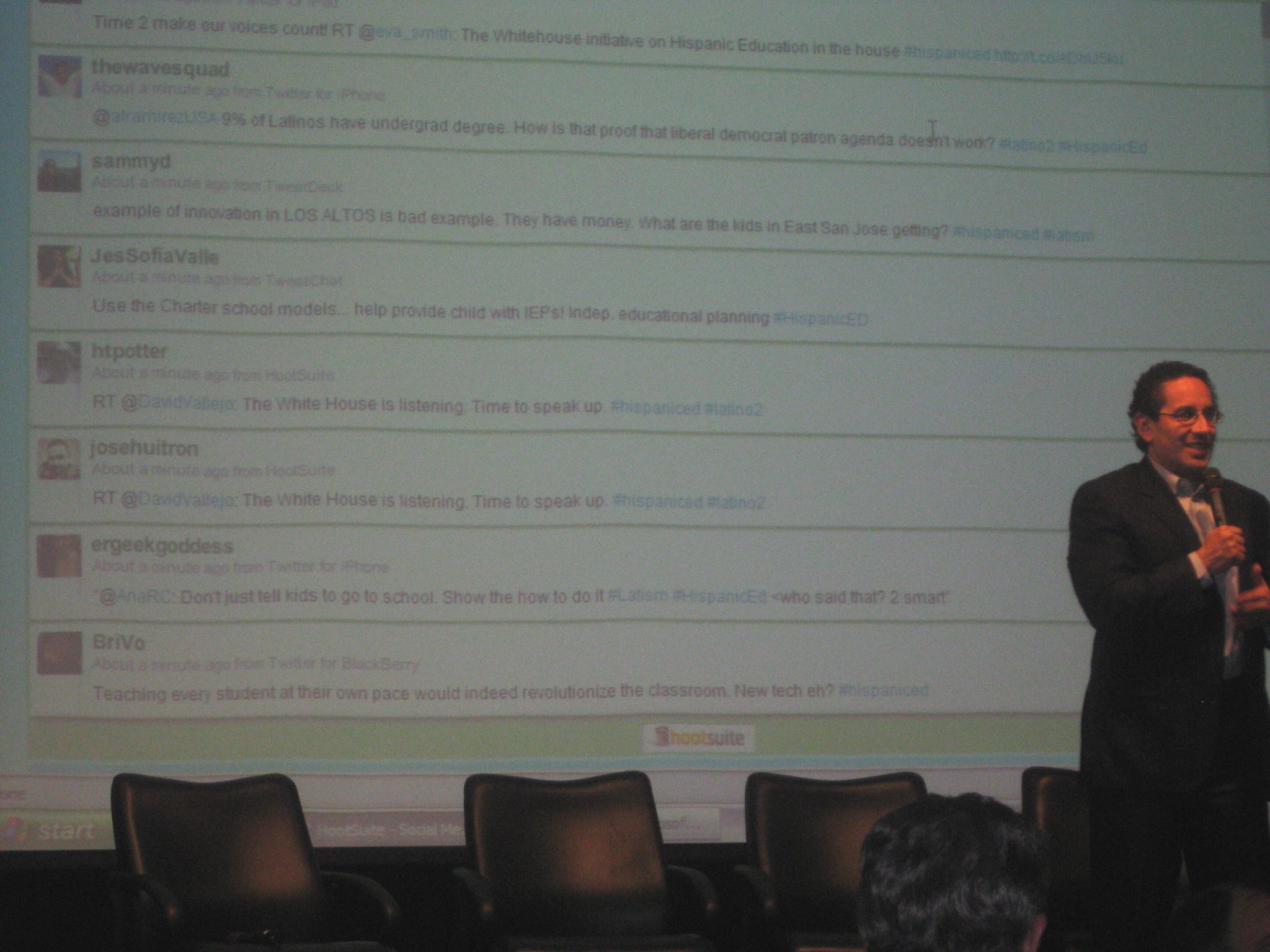
Juan Sepulveda from the White House Initiative on Educational Excellence for Hispanics.

Mr. Sepulveda took the social media off-line and lead us into small group discussions. His question was: With respect to technology, social media, and education, what should we start doing?
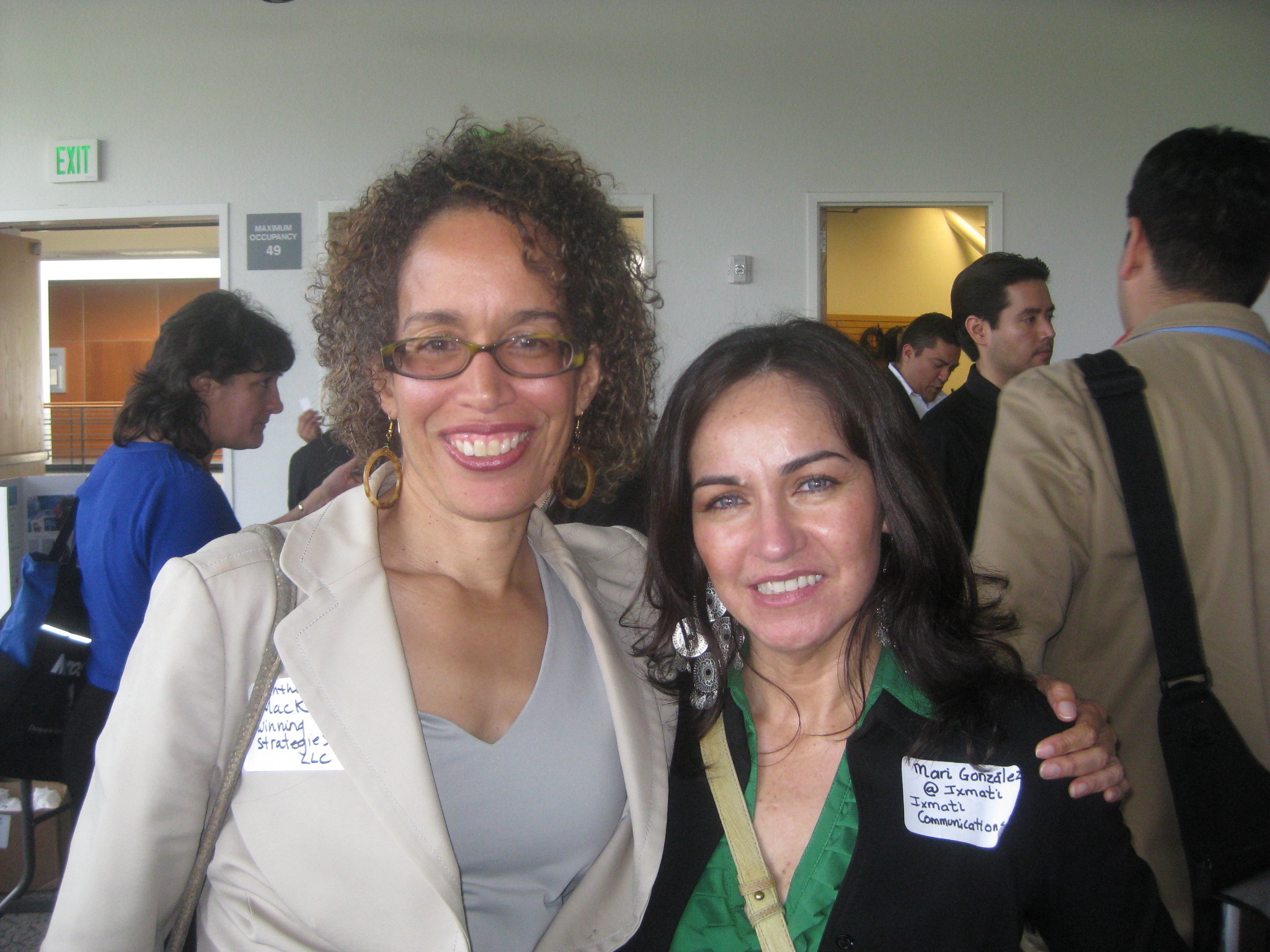
My unofficial mentor and a great colleague, Cynthia Mackey, and I at the end of the conference.
Latino2 was one of the most interactive, inspiring, and fun conferences I have ever attended.
Latinas Use of Social Media
By Mari D. González
Brazilian market research firm Sophia Mind reports some preliminary differences in social-network sites use between American and U.S. Latinas -women from Latin America including women of Brazilian descent.
Sophia Mind summarizes, “while American women use social networks mostly to connect with friends and family, [Latina women in the U.S., Brazil, Argentina and Mexico] use social nets to find information on products and services” (Malykhina, 2010, ¶ 4). The study notes the lack of culturally relevant content for Latina women in the U.S., and concludes that only 21% U.S. Latinas/Hispanic women feel social networks meet their needs.
Reaching out Latinos: Conversing with an Hispanic Marketer
By Mari D. González
We Marketers and Latinos who study intergenerational and broad-based Latinos/Hispanics can be both intrigued and frustrated by their complexities. Latinos/Hispanics in the U.S. keep growing not only in numbers but in intricacy. Thus, over-simplifying them as a group simply does not cut it. Early demographic predictions indicate that “the final figure could surpass 55 million, or 17% of the U.S. population.” (Ruben Navarrette, March 2011, CNN Opinion). Complete U.S. Census data has not been released as of today.
We need both hard data and a continuous dose of culture to speak as up-to-date and savvy professionals. We need to be informed by statistics but also through collaboration, conversations, self-observation and self-directed research.
Below is my short exchange on Facebook’s Hispanic and Online Marketing group with one of its members and a Hispanic Marketing Consultant.
Mari: Because Latinos/Hispanics in the U.S form a very large and culturally heterogeneous group, one of the complexities relate to “what language marketers should use” when targeting them –Spanish, English, both, and/or the hybrid Spanglish. As you indicate, segmentation is also generational; 18-25 year-olds prefer “bilingual/Spanglish.” I recommend that you check what Univision radio has done, at least in the Bay Area. They have 2 very popular radio stations, La Kalle (bilingual/Spanglish with a good mix of English and Spanish pop music) and Radio Romántica (boleros, groups, rancheras in Spanish only). What Univision may have concluded is that the Spanish-dominants are from an older generation and/or hold onto their country-of-origin values.
HM: Hi Mari and thank you! I will check out your blog and look into your suggestions. Generationally speaking, I’m wondering how the 35-50 year old Hispanics like their content as well, since they make up the largest growing segment of online users. For me, radio is a slightly different animal. It seems I also need to get a current assessment of our main market, Miami, and break down the current profile of online users who live in or travel to this diverse city. And judging from Facebook’s research, their top Hispanic users come from Spain, Mexico, Colombia and Chile. So I’ve got to overlay this somehow since these countries also represent a growing portion of the local Hispanic market. I believe the Colombians are now the second largest socioeconomic group behind the Cubans [in Miami, FL].
Mari: How do 35-50 year-old users prefer content? It all depends on the platform. Is it more professionally-oriented? Then it will be English. Is it more social? Then, it will be a combination of English and Spanish, and of their culture of origin and their culture of residence con un toque Colombiano, Cubano y/o Mexicano [with a Colombian, Cuban and/or Mexican touch]. However, there is this “Latino” encompassing layer that gives us a group identity. So spice it up “con un toque Latino” as well.
Edited by Connie Cobb
Facebook vs. Face-to-Face
By Mari D. González
It is not uncommon for older generations to hold a differing perception on the use of social-network sites from that of “the young and the digital.”
Many of us assume that social-network communication or the use of social media will eventually displace the need and/or desire for in-person interactions.
Media Associate Professor, S. Craig Watkins asserts differently. He observes that young people use social-network sites as an extension of their face-to-face interactions not as a replacement and that they mostly interact in Facebook with their already-made friends and school peers. For them, social media is what for older generations the phone was.
I shall expand on this topic soon.

 IXMATI