Home » Posts tagged 'social media' (Page 2)
Tag Archives: social media
LATISM Conference in Pictures
By Mari D. González
I attended the Latino2 Silicon Valley Conference on Saturday, June 11, 2011 in Mountain View, CA and below are my pictures.
LATISM is the largest organization of Latino/Hispanic professionals engaged in social media.
Ana Roca-Castro, LATISM founder, opened the event.
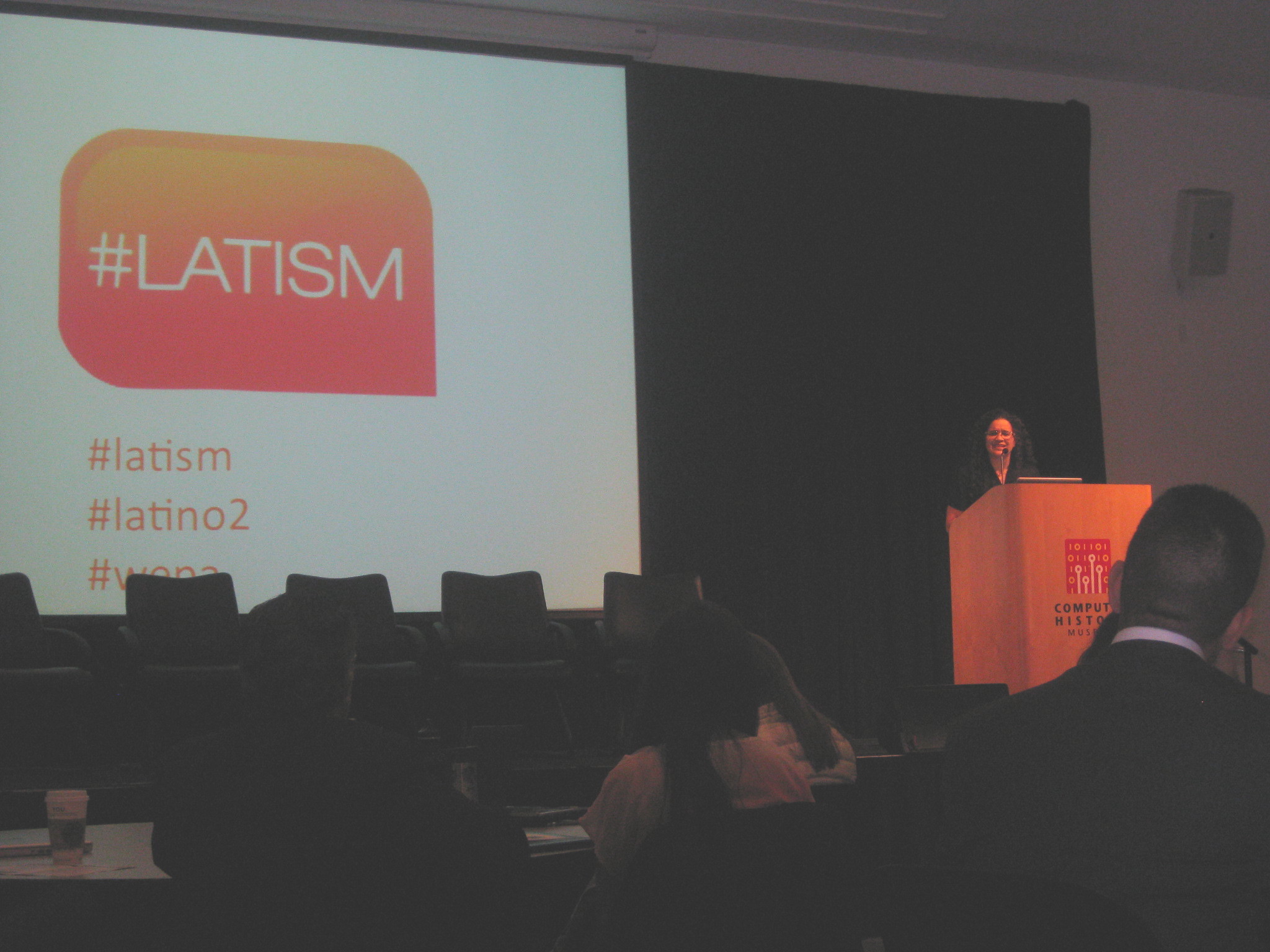
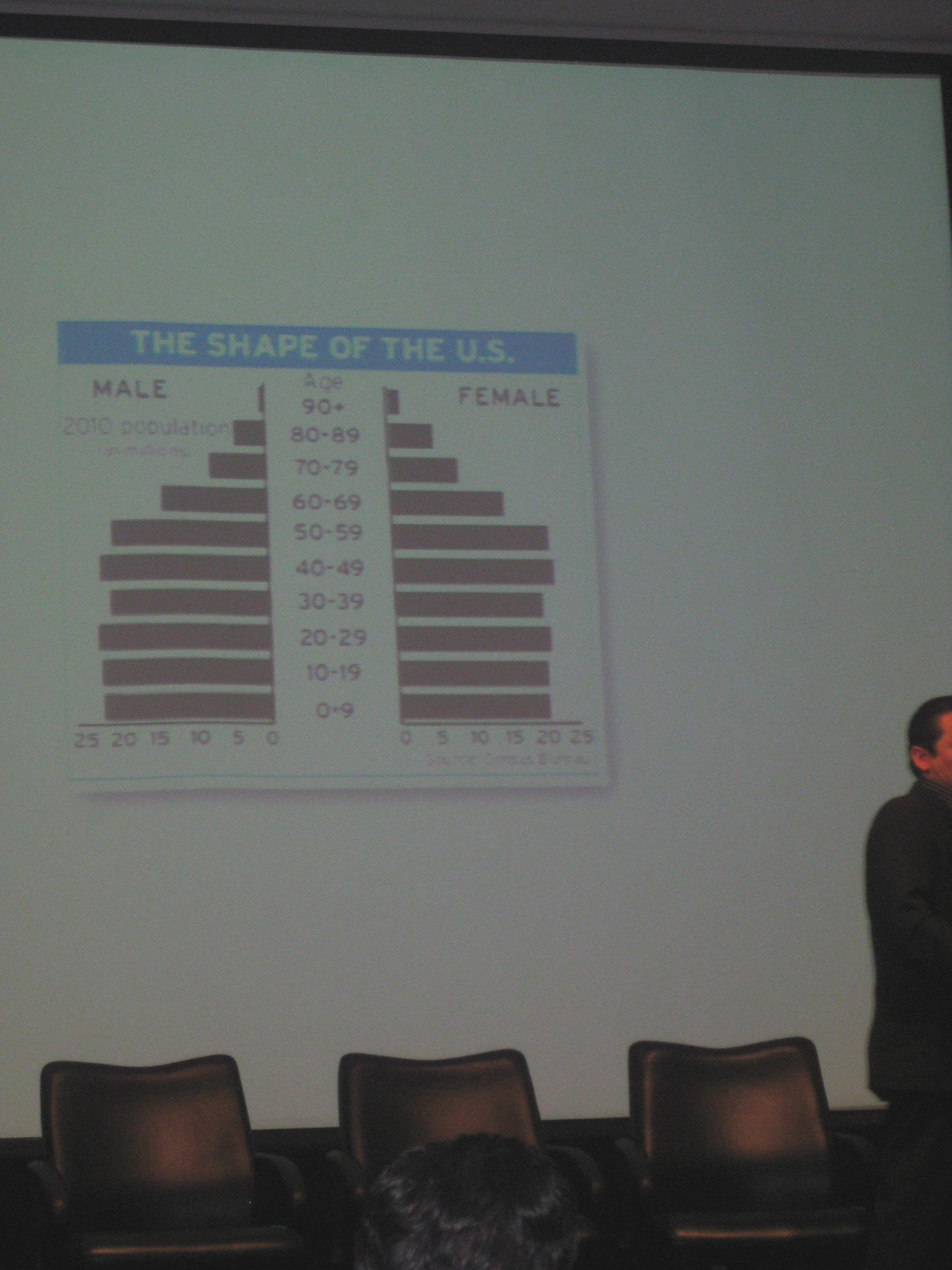
Giovanni Rodriguez, LATISM board member, explaining that Latinos are getting older slower, joining social media faster, and clicking more.

Our Key-Note Speaker, Brian Solis, Social Media Strategist and author of Engage.

The largest age segment of social media users are females between 40-59.
Brian Solis on his way out. I was able to get this picture with him.

Ana presented the most popular social network sites by Latinos with Facebook, Twitter, and Youtube topping the list, and LinkedIn in fourth place.

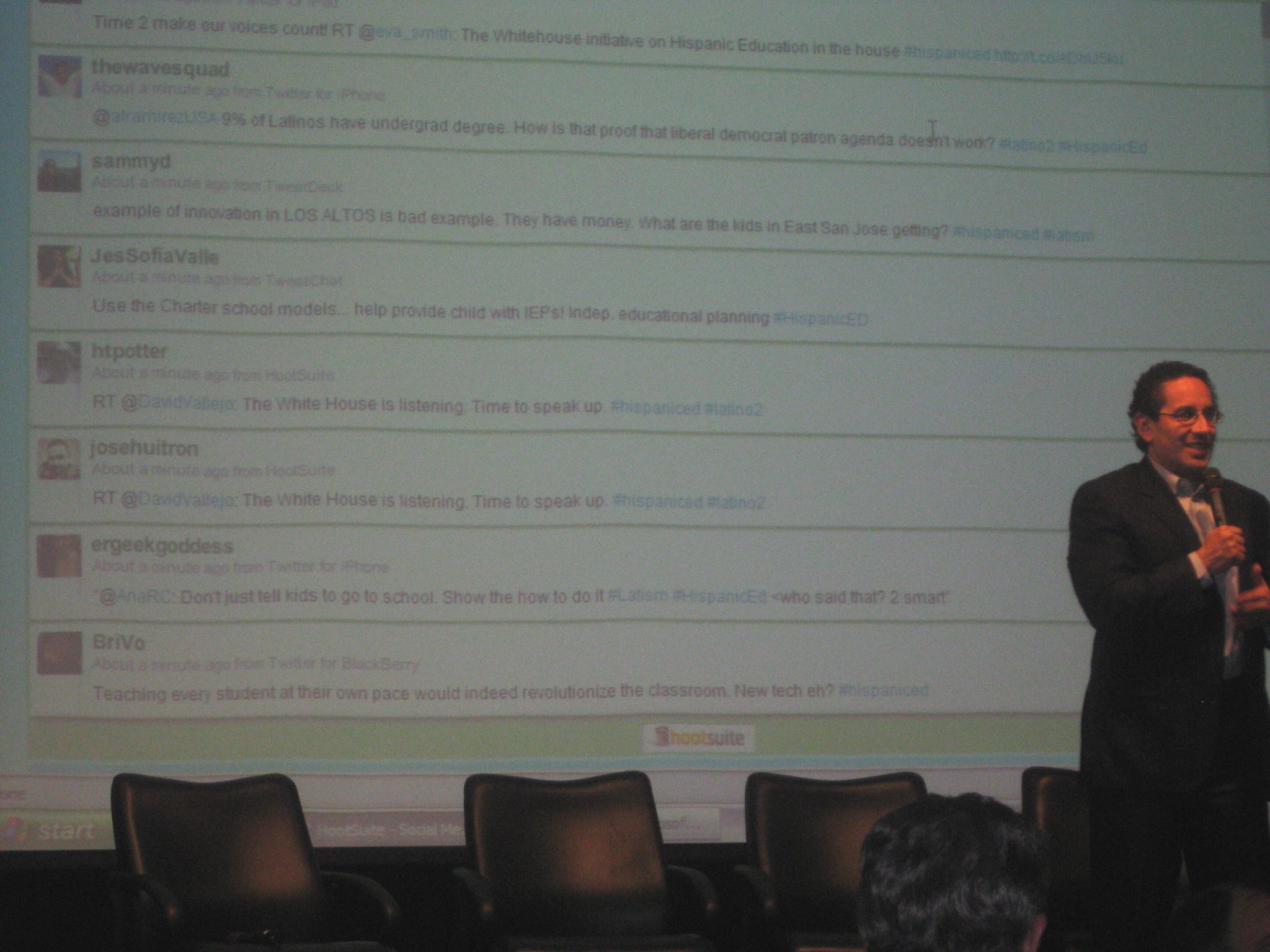
Juan Sepulveda from the White House Initiative on Educational Excellence for Hispanics.

Mr. Sepulveda took the social media off-line and lead us into small group discussions. His question was: With respect to technology, social media, and education, what should we start doing?
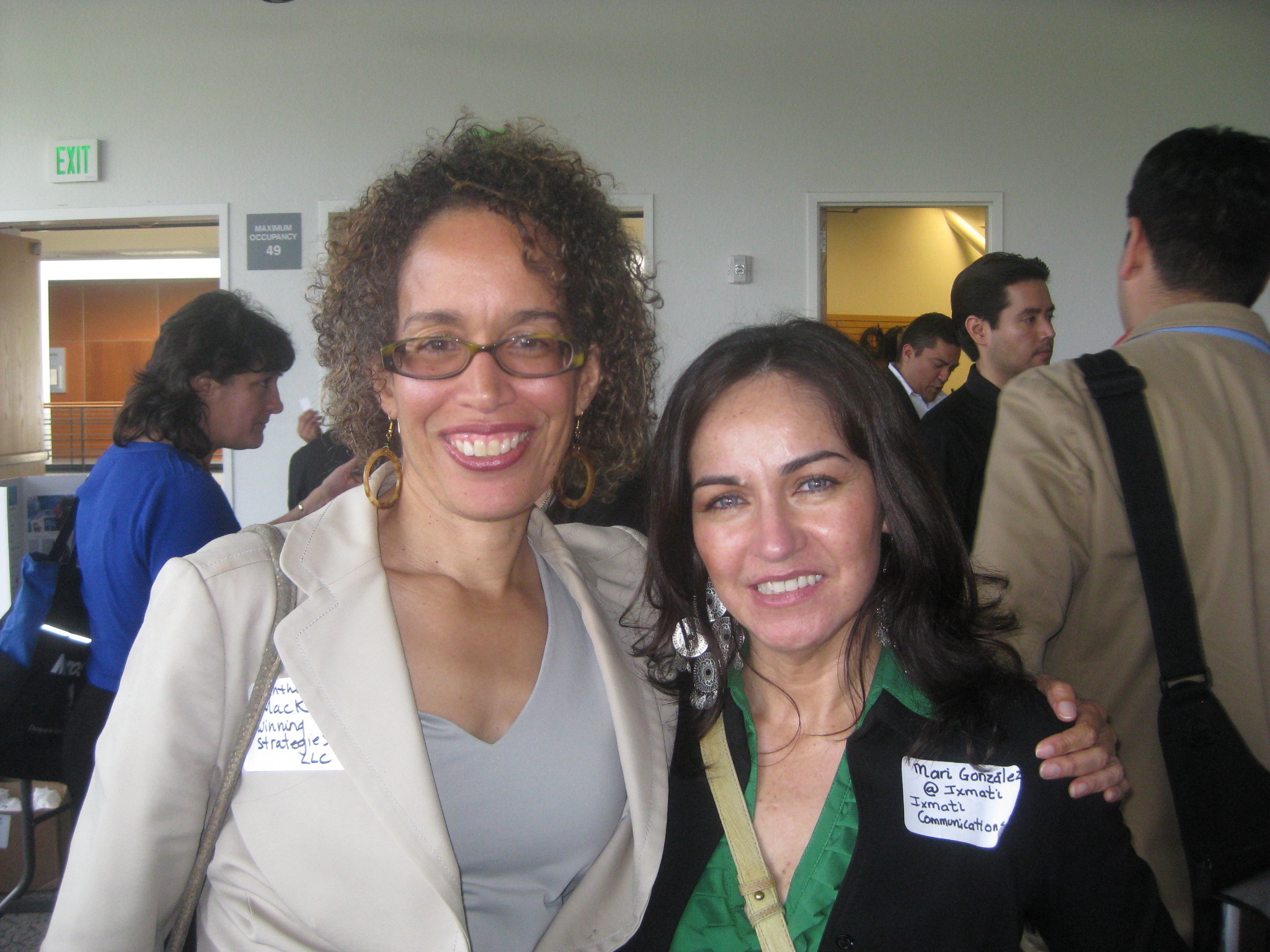
My unofficial mentor and a great colleague, Cynthia Mackey, and I at the end of the conference.
Latino2 was one of the most interactive, inspiring, and fun conferences I have ever attended.
Latinas Use of Social Media
By Mari D. González
Brazilian market research firm Sophia Mind reports some preliminary differences in social-network sites use between American and U.S. Latinas -women from Latin America including women of Brazilian descent.
Sophia Mind summarizes, “while American women use social networks mostly to connect with friends and family, [Latina women in the U.S., Brazil, Argentina and Mexico] use social nets to find information on products and services” (Malykhina, 2010, ¶ 4). The study notes the lack of culturally relevant content for Latina women in the U.S., and concludes that only 21% U.S. Latinas/Hispanic women feel social networks meet their needs.
Invitation to Participate in a Social Media Study
You are invited to participate in a research study which will ask you about your social-network use and preferences, and the cultural characteristics you perceive in social media. My name is Mari D. González, and I am a student in the Masters in Intercultural Relations Program at the University of the Pacific, School of International Studies. You were selected as a possible participant in this study because of your interest in social-network sites.
This study will compare second-generation Latinos/Hispanics in the U.S or native-born (born in the U.S.) with at least one foreign-born parent (parent born in Latin America: Mexico, Central America and South America) vs. dominant culture (people who predominately identify as U.S.-white and do not identify with a particular U.S. ethnic minority).
You will receive a Peet’s Coffee & Tea gift card of $5.00 as a thank you for your participation. Social-network users who identify with either cultural group are encouraged to participate.
If interested, please go to Social Media Study include your email at the end of survey to contact you and set up a 45 min. phone interview. Please email me at maridgonzalez@yahoo.com for more information.
Being Latino on Facebook II
By Mari D. González
This is the second part of my interview with Lance Rios, founder and administrator of Being Latino, “a communication platform designed to educate, entertain and connect all peoples across the global Latino spectrum.” It is the largest Latino/Hispanic page on Facebook with 41,460 “People Like This” to date -an additional 9,884 followers since the date of my first post on May 27, 2010.
For Lance, Facebook provides an already established and flexible platform on which participants can “communicate back and forth in whatever language they want, Spanish or English.” Conveniently, there are plenty of Latino/Hispanic social-network users. According to him, there is no need to create any specific social-network website for them.
Mainstream vs. Latino
I wanted to know if there were any differences between “mainstream” and Latino Facebook users. Mainstream users are considered the general market or non-ethnic segment in marketing. In other words, mainstream users are by and large in-tune with the popular U.S. American culture. Lance contends that Spanish-language phrases that are immediately recognized by Latinos/Hispanics such as, “Que pasa” and “Mi gente” are essential when communicating with Latinos on social-network sites and that using “English-language [only] is limiting.” Thus, Spanish as a language becomes a salient cultural indicator for Latinos even when only a few words are being used.
Singh, Baack, Kundu and Hurtado (2008) argue, “[Spanish language] tends to be the most visible manifestation of U.S. Hispanic identity.” According to my my academic research on digital media, bilingual, second-generation Latinos/Hispanics prefer English websites that include phrases and words in Spanish because those speak to their cultural identity. Lance agrees, “You need to speak their language.” Language choices represent how young Latinos see themselves. Their language is as hybrid as their cultural identity.
Social Media Trends
When asked about Latino trends in social media, Lance first asserts that Latinos are a strong market, “Latinos are a young audience and the fastest growing.” He explains that Latinos have a great interest in connecting with other Latinos wherever they may be. For instance, “they want to know what is going on with Latinos in East L.A.,” which unlike with any other demographic it is consistent with Latinos/Hispanics. For Lance, “connecting among Latinos within the Latino community is to identify and to [identify is to] capitalize.”
Lance affirms that Latinos are less afraid of saying what they think and feel, “they are more expressive in social media and more willing to put it out there” adding that in Latin America people are encouraged to carry over [their culture] by expressing it.” According to him, Latinos in the U.S. are not different. He states, “they are expressive and passionate” about their culture.
I was very curious to know which topics get the most responses and keeps Latino/Hispanic fans engaged. Lance notes that it is difficult to capture the attention of social media users with topics that need more consideration. He advises keeping things straightforward and “not to use too much thought, simple [uncomplicated] stuff generates the most responses.” As for my appraisal, his topics are hardly ever simple; his spin is though. For instance, Lance’s October 2, post with a link to the L.A. Times article, “CNN’s Rick Sanchez fired after statement about Jews in TV” reads on top, “CNN fires news anchor, Rick Sanchez, Thoughts?” On October 2, 2010, this post generated 103 comments within a day of posting.
Edited by Connie Cobb
Social Media is Collectivist
By Mari D. González
Whenever I hear advice on the best use of social media to attract users, I go back to my introduction to cross-cultural communication graduate course.
In collectivist (Latin America, Arab countries, Southern Europe) as opposed to individualist (U.S., Northern Europe) cultural groups, social media is intuitive. People in collective cultures are group-oriented. Their self-identity is directly related to their group or groups of reference. They thrive by being sensitive to the group’s harmony. For members of collectivist societies, communication with one another is frequent and spontaneous. Because language is a reflection of culture, one might say that Spanish-speakers tend to be more social. Collectivist cultures as opposed to task-oriented or individualist cultures understand that in social media:
- Broadcasting is not conversation.
- Two-way communication is conversation.
- People can tell who is not being genuine.
- Unless you are a broadcaster, social media is about the quality not the quantity.
- Conversations require three steps – listening, processing information, and responding.
- Conversations and meaningful engagement are time consuming.
- Time is not necessarily money and relationships take you further than money.
As an interculturalist or intercultural communications professional, my focus is on what happens when people from two different cultural groups or different enculturation, i.e., staff at U.S. companies, whose values are dominant, and Latinos communicate, assuming they are using the same language–English and/or Spanish. In essence, my interest is in studying how the speaker’s message is received and interpreted by the listener according to contextual meanings that are intrinsic to her or his early socialization.
Edited by Connie Cobb

 IXMATI