Home » Articles posted by Mari D. Gonzalez (Page 9)
Author Archives: Mari D. Gonzalez
Best Blog Comments: Cross-Cultural vs. Intercultural

Image by Roslan Tangah (aka Rasso) via Flickr
Since I published the article “Cross-Cultural vs. Intercultural,” it has consistently been the top post according to Ixmati Communications’ WordPress dashboard statistics. This article also prompted comments from two subject matter experts.
Leo Salazar wrote:
“Well written, Mari. One learns by writing, and the more I write the more I realize how little I know. I welcome the learning offered by experts such as yourself, who take the time and trouble to help me understand. It’s unfortunate that the particular writer on the Mashable, oops, I mean the well-respected social media blog, wasn’t open to your contribution.
You have, indeed, pointed out a very fundamental difference in terms. Most people who have a good command of the English language should understand that “inter-” and “cross-” have completely different meanings. You travel the interstate to go cross-country, but you can’t take the cross-state to go inter-country.”
Leo is the principal at Effective Intercultural Business. He specializes in learning and development in an intercultural context. He’s based in Amsterdam, Netherlands. More about Leo @srLeoSalazar
Joe Ray wrote:
“Good explanation, Mari. I have been working on presentation that includes some of these aspects and knew there were subtle yet contrasting differences in the terms.
I seem to hear the term cross-cultural thrown about more so than intercultural when navigating through the Latino market universe. However, much of my interaction is also with Native American tribes and have noticed that one term they use quite a bit is intertribal.
Your explanation was clear and very helpful. Much appreciated!”
Joe is the Creative Director at Estudio Ray, a branding agency that specializes in connecting with Latino consumers and in Hispanic marketing. He is based in Phoenix, Arizona. More about @JoeRayCr8iv
Translation Standards – FIT 2011 World Congress

Image via Wikipedia
By Mari D. González
I attended the International Federation of Translators – FIT 19th World Congress in San Francisco representing the International Medical Interpreters Association – IMIA and participated in two of the sessions on August 3 and the Key Note Session on August 4. Here are my notes from the two sessions.
I. “Quality Standards and the Translator’s Role” presented by Kristen Corridan, LUZ, Inc., Procurement and Quality Manager.
- Quality is in the eye of the beholder or defined by what the client wants.
- Standards are the requirements that ensure quality but do not delineate the “how” or “what” in a translation project.
- Standards define and measure the process, customer satisfaction, and the requirements.
- Basic translation job requirements are:
- Must done by a native speaker
- Who is a subject matter expert
- Has a number years of experience
- The translation process should include:
- Client-approved glossary agreed by translator
- Editing
- Proofing
- ISO(International Organization for Standardization) is the world’s largest developer and publisher of International Standards.
- GALA(Globalization & Localization Association) has developed new standards.
- Localization Standards are:
– EN15038 Europe
– ASTMF2575-06 International
– SAE-J2450 Automotive criteria (acknowledged because it taps into terminology and grammar)
In sum, the standards ensure a “process” that is uniform but not necessarily measure the “quality” of the content.
II. Translation Quality Standards presented by Jiri Stejskal, U.S; Beatriz A. Bonnet, U.S., Zhang Ciyun, China; and Reiner Heard, Germany.
EUROPE
- In Europe, translations are done by a team of professionals that include a:
- Translator
- Reviser
- Reviewer
- Proofreader
- Final Verificator
- Standards are overseen by the European Commission and focus on:
– Certifications
– Quality
UNITED STATES
- In the U.S., standards are more detailed and include:
– Terminology and tools
– Specifications based on job standards and client’s requests such as:
-Marketing
-Nonprofit
-Pro bono
- The editing and proofreading can be done by the translator.
- Standards are about meeting the expected requirements of the outcome.
CHINA
- Mr. Ciyun described the current challenges China faces since the demand for translations has grown beyond the capacity to establish a nation-wide uniform translation process.
- The biggest challenged is the conflict between the market share and ensuring quality with the goal on customer satisfaction while working on the urgent need for standardization.
- An important fact he shared was the earnings disparity between a translator and an interpreter. An interpreter can make $1,000 per day compared to $30 per day earned by a translator.
- He spoke of
– A fast growing industry
– Chaotic market orders
– Translations that began as in-house work for which there is no regulation
– 1 million people is involved with doing translations
– Translators are faced with new Chinglish (English and Chinese) terms.
Facebook Ten Top Countries
By Mari D. González
Last year, the August 13, 2010, Huffington Post’s Huffpost Tech, listed the following countries as the top Facebook users:
- U.S.
- U.K.
- Indonesia
- Italy
- India
- France
- Germany
- Mexico
- Turkey
- Canada
This year, as of July 5, Check Facebook, a Facebook marketing statistics site, contains a slightly different list of top Facebook countries:
- U.S.
- Indonesia
- U.K.
- India
- Turkey
- Mexico
- Philippines
- France
- Brazil
- Italy
What makes these countries top users?
- extensive access to Internet
- high population numbers
- users’ affinity for U.S. culture
- familiarity with the English language
- a high number of young users
- or, a combination of some or all these variables.
If you follow Internet use around the world, you might be familiar with the popularity of other social network sites such as Google’s Orkut in India and Brazil. With Brazil making this year’s list, one can speculate that users are moving from Orkut to Facebook. Yet, only 31.46% of Brazilian online users are on Facebook.
As for Indonesia, Turkey, Mexico, and the Philippines, 100% of online users are on Facebook, which means no other social-network or online communication platform is competing.
Why isn’t China on the list? China’s government prevents Internet users in China from accessing Facebook. The most popular site in China is RenRen, which can be accessed in the U.S. and is supported by U.S. investors.
Another question: Are the top 10 Facebook countries selected based on the percentage of each country’s total population of active online users or on the total number of users?
For example, 30% of Mexico’s total population (112,322,757 x .3 = 33,696,825) are Facebook users but 70% of Canada’s (34,507,000 x .7 = 24,154,900). It appears that Mexico made the list based on population-number advantage, and Canada was dropped because of its smaller population.
Edited by Connie Cobb
LATISM Conference in Pictures
By Mari D. González
I attended the Latino2 Silicon Valley Conference on Saturday, June 11, 2011 in Mountain View, CA and below are my pictures.
LATISM is the largest organization of Latino/Hispanic professionals engaged in social media.
Ana Roca-Castro, LATISM founder, opened the event.
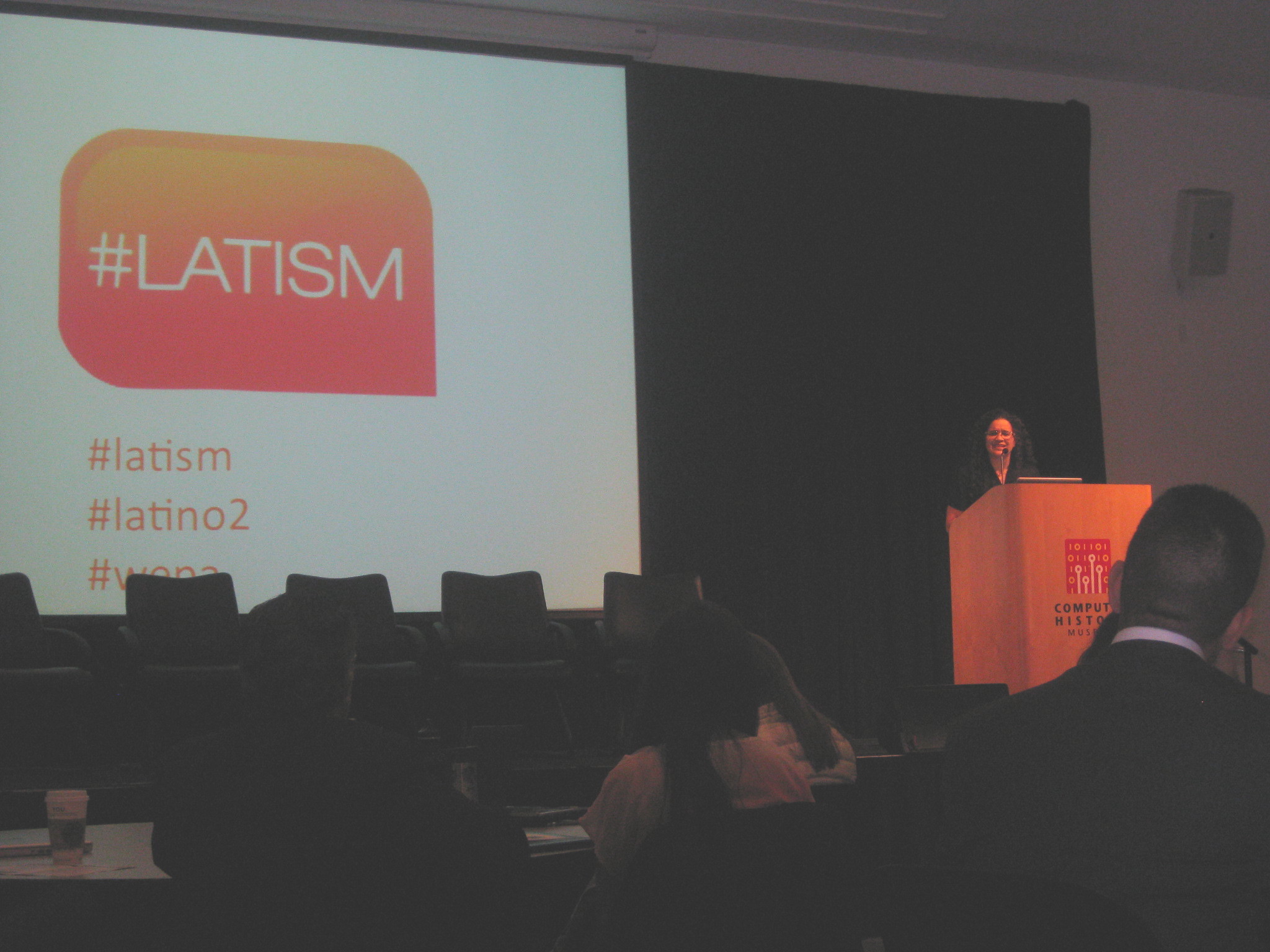
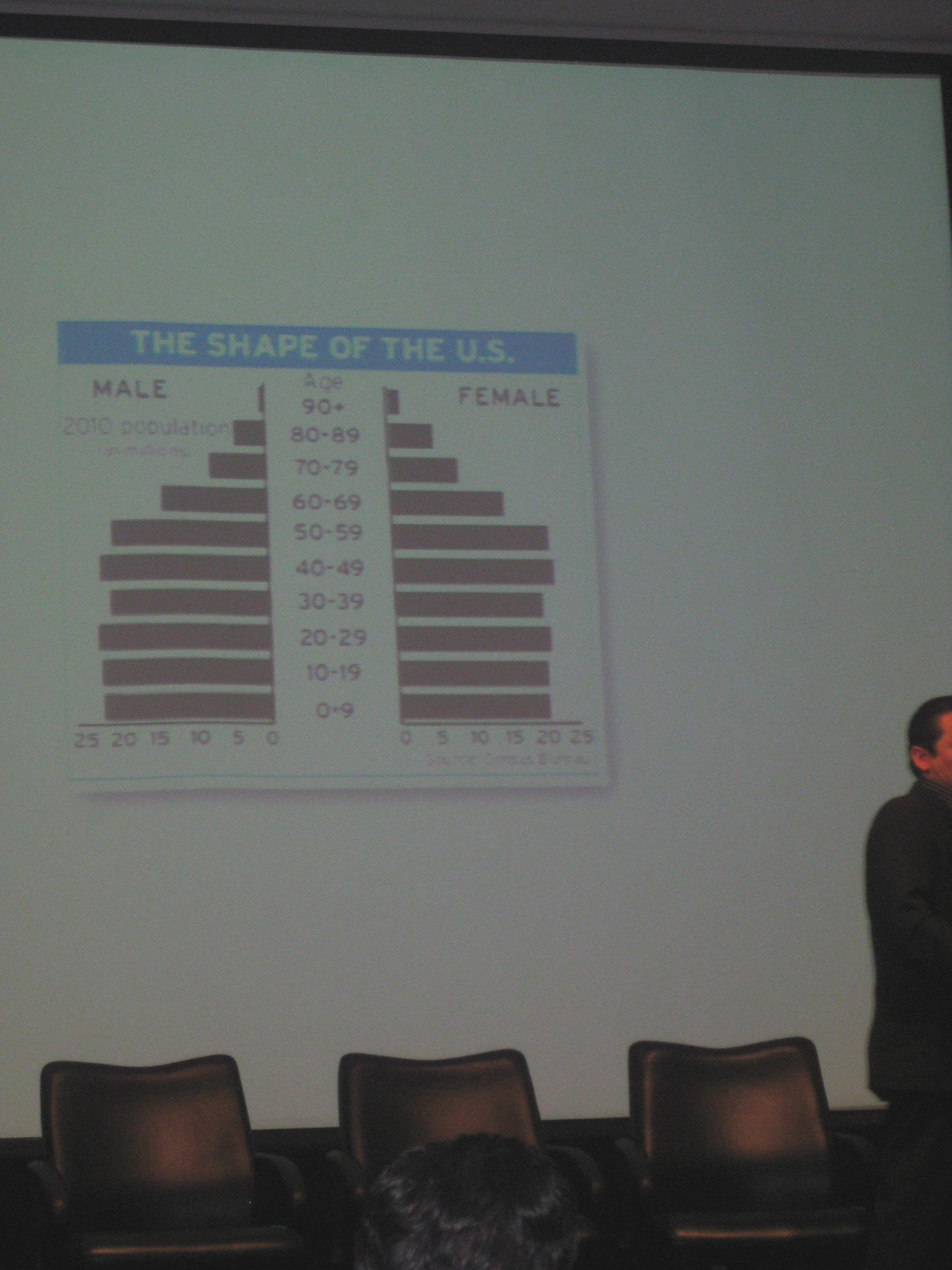
Giovanni Rodriguez, LATISM board member, explaining that Latinos are getting older slower, joining social media faster, and clicking more.

Our Key-Note Speaker, Brian Solis, Social Media Strategist and author of Engage.

The largest age segment of social media users are females between 40-59.
Brian Solis on his way out. I was able to get this picture with him.

Ana presented the most popular social network sites by Latinos with Facebook, Twitter, and Youtube topping the list, and LinkedIn in fourth place.

Juan Sepulveda from the White House Initiative on Educational Excellence for Hispanics.
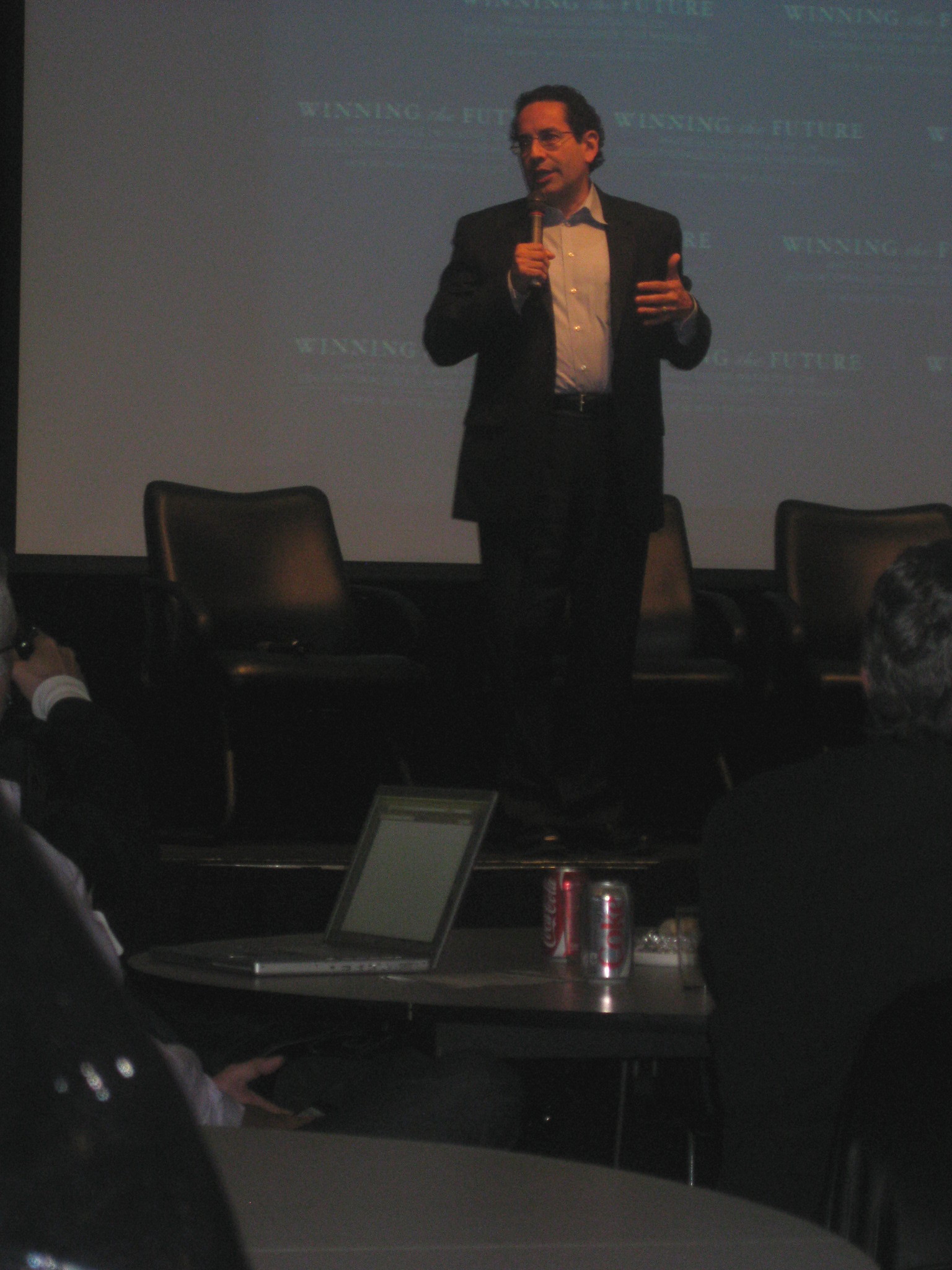
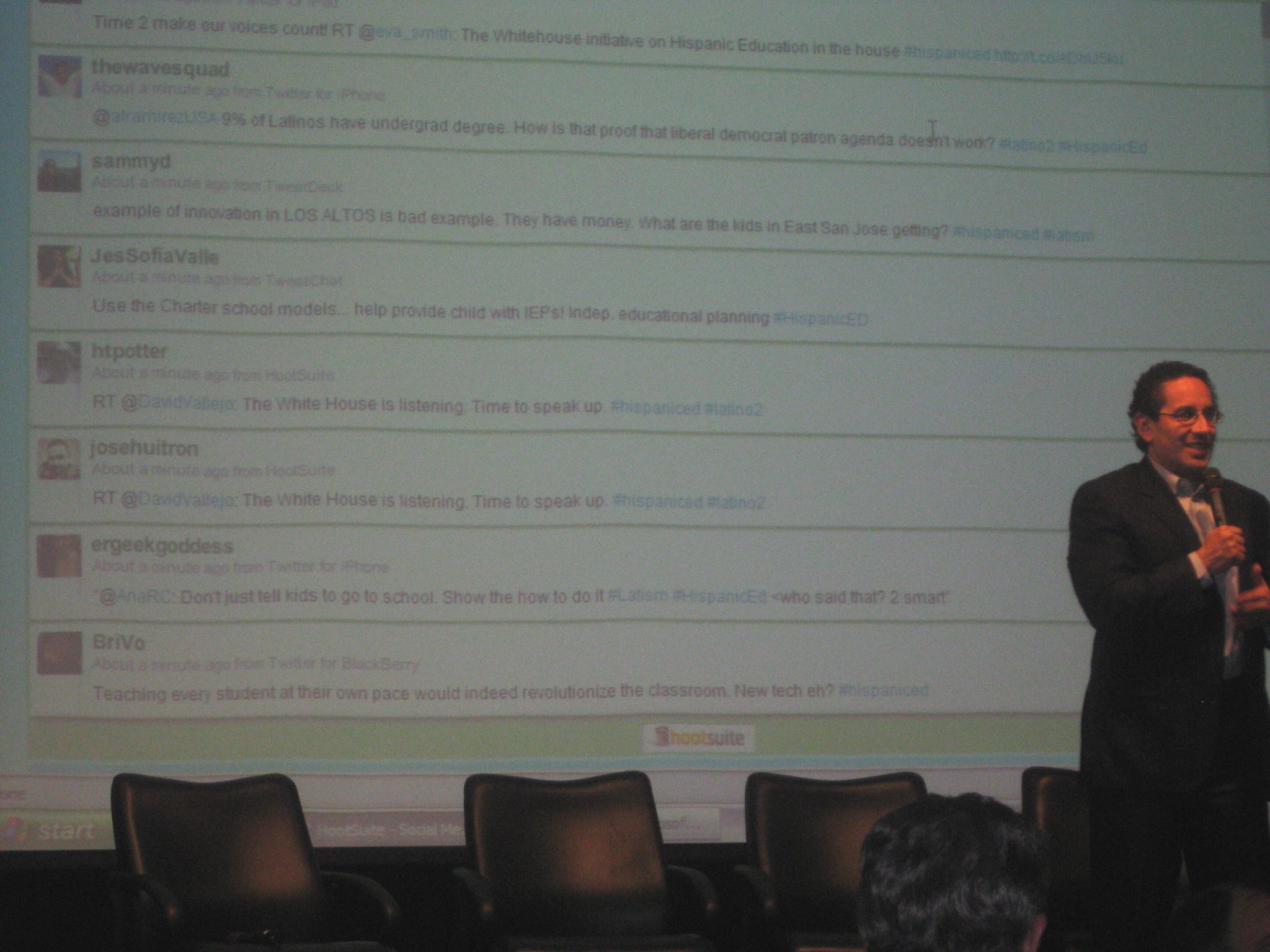
Mr. Sepulveda took the social media off-line and lead us into small group discussions. His question was: With respect to technology, social media, and education, what should we start doing?
My unofficial mentor and a great colleague, Cynthia Mackey, and I at the end of the conference.
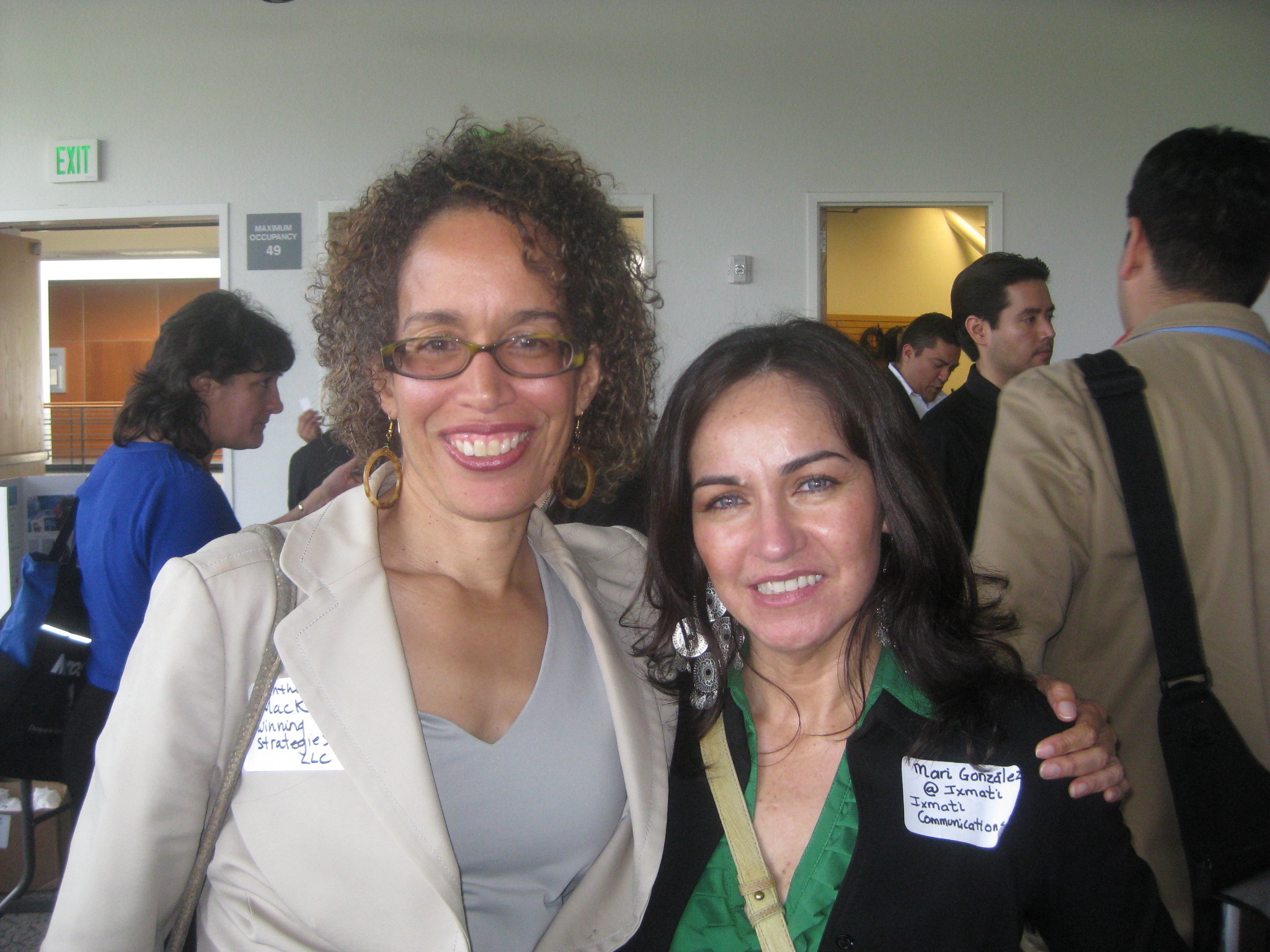
Latino2 was one of the most interactive, inspiring, and fun conferences I have ever attended.
Identity and Endearing Names
By Mari D. González
Our view of ourselves continues to change as the context changes, as we grow in market potential, in political power, and become more educated. No ethnic group named by an out-group has ever been monolithic. The grouping and the naming is usually in the context of a dominant vs. minority group in which the “namer” assumes control. I’m reading about the emergence of a new public identity of Moslems in Germany where they are seen as having a religious identity even when they no longer practice Islam.
Different historical factors influence the relationship between Americans of African vs. Anglo descent and Americans of Latino/Hispanic vs. Anglo descent. The first has been anchored in color alone (which I’m glad is changing) whereas Latinos/Hispanics come from a reverse view of color influenced by Catholic humanistic values where any amount of European blood moved them away from their indigenous or African roots and thus closer to the dominant social group.
I’d say that because I am “blanquita” or “guerita,” and enjoy the unearned privileges that unfortunately come with it, I have even more responsibility to advocate for an educated view of Latinos/Hispanics, immigrants, and any minority for that matter. By the way, “blanquita” and “guerita,” aren’t used as endearments but are common terms in families where one sibling is blonde with light eyes and the other is dark skinned such as in my own family.
I was born and raised in Mexico and moved to the U.S. I have college degrees from both countries, which has definitely shaped my views. And contrary to what the media portrays, the majority of people Latin America are not poor but working class (not much different from the U.S. now in terms of unemployment and job security). Here are Senator Chris Dodd’s words that support my view:
“… the Latin American economy, long defined as “emerging,” has finally emerged. In the five years leading up to the 2008 global financial crisis, Latin American economies experienced growth rates of 5.5 percent, while keeping inflation in single digits. And when the crisis did hit, Latin America stood strong, weathering the crisis better than any other region in the world. While income inequality remains a significant issue (as it does in the United States, I might add), 40 million Latin Americans were lifted out of poverty between 2002 and 2008.”
Below is the Hispanic Professionals LinkedIn group discussion thread that inspired me to write this post.
Member of LinknedIn’s Hispanic Professionals group: “What has happened in the US is that scholarly research and media attention has focused principally on the urban poor and then attributed what they learned about that particular world view to blacks in general.”
Mari: This is exactly what I call “Ethnifying Class,” a term I thought up based on personal experiences as I continue to move back and forth between whites and Latinos/Hispanics in different circles (social classes). I recommend that you read “The ‘Splintering’ of America’s Black Population” which talks about the now recognized socioeconomic diversity among Blacks in the U.S.
Member of LinknedIn’s Hispanic Professionals group: “This does not happen with white Americans … the attitudes and behavior of poor urban and rural whites are not attributed to whites in general.”
Mari: Because whites make up the dominant culture, they can afford to campaign for how they want us to see them. However, it must be a lot more difficult to be poor and white because poor whites are invisible in a way.
Edited by Connie Cobb

 IXMATI